
It's "In the System." Nobody Knows Which Shelf.
Logistics Software Development That Shows Where Every Package Actually Is
Warehouse, shipping, tracking, billing and customer portals for forwarders, 3PLs and shippers. Logistics software development by a team that has delivered two full logistics systems and runs one of them today. Source code, infrastructure and data are yours.
- More than 4,000 packages a month across roughly ten countries, every floor task on a phone.
Five initial discovery calls a week, one a day.



- Systems Shipped
- 50+
- Client Retention
- 98%
- Uptime
- 99%
- Engineers & Designers
- 40+
Where Logistics Operations Get Stuck
Four problems bring most clients to a logistics software development company.
Visibility stops at the dock.
Packages vanish between carrier, hub and handoff. Customers call to ask where things are because your systems can't tell them, and someone on your team spends the afternoon finding out.
Paperwork slows the freight.
Manifests, customs documents and proofs of delivery keyed, scanned and chased by hand. Every re-key is a chance for an error, and every error is a parcel held at the border.
Systems that don't agree.
The WMS, the carrier portal and the accounting system each hold a different truth, and someone reconciles them every morning before the real work starts.
Billing after the fact.
Charges calculated days later, adjustments by hand, margin leaking through every one. By the time the invoice goes out, nobody remembers why the surcharge applied.
These are not technology problems first. They are process problems that the wrong software made permanent, and they are the reason logistics software development has to start with the process, not the product.
Who This Is For
Logistics software development is a wide phrase. Here is who we actually build for.
Package forwarders and consolidators.
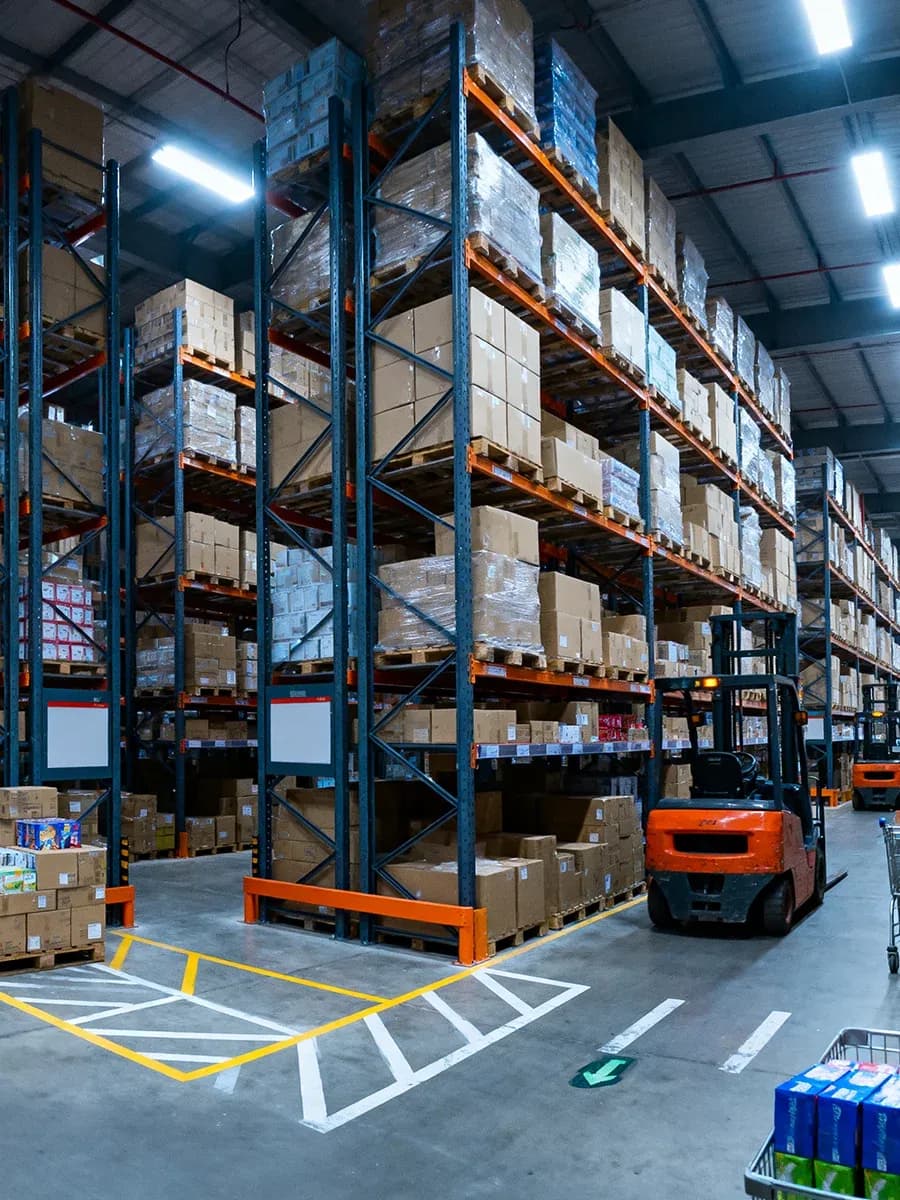
A US address for customers abroad, a warehouse where packages arrive, get inspected and charged, and manifests out to each destination. We have built this end to end, across roughly ten countries, with every floor task on a phone.
3PLs and fulfillment operations.
Receiving, racking, picking, packing and shipping for multiple clients, each with their own rules and their own reporting. 3PL software development is about per-client logic on a shared floor, and that is a structure a template handles badly.
Shippers who insure or manage high-value freight.
When the shipment is the risk, the system has to know the moment one goes quiet. We built an insured-shipping platform on the FedEx API, and a separate automation that watches 2,000+ shipments a day with a rule instead of a monitoring team.
Couriers and last-mile operators.
Pickup, delivery, proof of delivery and customer notifications, from the phone the driver already carries. Courier software development is warehouse management system development with the warehouse on wheels.
If your business moves parcels, pallets or freight and the software is where it slows down, logistics software development is the work we do for you.
Three Ways We Help
Build.
Logistics software development proper: custom logistics software for warehouse systems, forwarding platforms, shipping platforms on carrier APIs, customer and partner portals.
See the Custom Software Development pages.Automate.
Exception monitoring, customer notifications, charge calculation, manifest generation, customs-document chasing.
See the AI Automation pages.Grow.
AI inside the CRM and lead-generation tools you already run, so the sales side of a logistics business keeps pace with the operations side.
See AI Powered CRMs and AI Powered Lead Generation.
Should You Build, Automate or Buy?
- 01
Build
Best when: Your operation is what makes you different and no product expresses it You get: A system built from your real process, owned outright Watch out for: Discovery takes longer than you expect; it should
- 02
Automate
Best when: The process works but people are doing what rules could do You get: Fewer hours on re-keying, chasing and checking Watch out for: Automating a broken process makes it break faster
- 03
Buy
Best when: A standard TMS or WMS fits your operation You get: Fast setup, vendor support, per-seat fees Watch out for: Workarounds that become the process
The honest line under Buy: if an off-the-shelf TMS or WMS fits your operation, buy it. We have sat through the demos with clients; sometimes the answer is yes. A logistics software development company worth hiring will tell you when buying is the better call.
Custom Logistics Software We Build
These are the systems our logistics software development work has produced, and the ones we are asked for most.
Warehouse management system development (custom WMS)
with every floor task on a phone: arrival scan, inspection, dimensions and weight, photos, racking, manifesting. No scanners, stations or cabling.
Package-forwarding and courier platforms
with customer accounts, dashboards and notifications at every status change.
Shipping platforms on carrier APIs
(FedEx in production), including insurance and claims workflows.
Destination and partner systems,
so each country, agent or client sees only their own operation while the hub sees everything.
Billing that calculates at inspection,
with payment moving the package to the next stage instead of an invoice going out days later.
Reporting the owner actually wants:
airline, warehouse and vendor costs, agent commissions, margin per shipment, profit.
Automation in Logistics Operations
Often the fix is smaller than a new system. Half of logistics software development is rules between the systems you already have.
Exception monitoring.
Any shipment with no status update for a set window is flagged, and escalated if it stays quiet. One person checks the list in minutes instead of a team watching screens.
Customer notifications
at every status change, by dashboard, email or WhatsApp.
Charge calculation and invoicing
triggered by inspection data, not by someone remembering.
Manifest generation and document handling,
including customs paperwork.
Carrier tracking
pulled in automatically, so nobody checks a portal by hand.
Customs-document chasing.
For parcels whose recipients aren't in your system, an automation that asks for the tax ID by email and WhatsApp, keeps asking until it has it, and prepares the shipment file for the clearing agent.
How Logistics Software Development Works With Us
Discovery on a logistics system means sitting on the warehouse floor. We watch a package arrive, get inspected, get charged and leave. We ask what happens when it arrives damaged, when the customer disputes the charge, when the manifest is short, when a country changes its customs rule. Every logistics business we have worked with had a documented process and a real one, and they were never quite the same.
Then we design the system in layers that match the operation, which is the part of logistics software development a template can't do: a hub system, destination or client systems, and the roles inside each. Build runs in two-week sprints with the receiving screen shipped first, because the floor team is the hardest audience to win and the most important. Launch is on your infrastructure, with the old process running beside the new one for the first days. Handover gives you the code, the documentation and the credentials; most clients keep us on as the operation changes.
As a logistics software development company we build custom logistics software in Python with Django or FastAPI, React, PostgreSQL and Redis, with mobile-first screens for the floor and the field, and Next.js where a public site is part of the system.
Logistics Software Development in Production
YourEasyShop.
A package-forwarding network across roughly ten Caribbean countries, from the Miami warehouse to proof of delivery. Every floor task on a phone, charges calculated at inspection, partners in each country seeing only their own operation. First version live in three months, full platform in six, and still improving in production. More than 4,000 packages a month. This is the logistics software development project we point to first.
YourEasyShopInsured shipping platform and monitoring.
A client who insures high-value shipments needed a platform to run the business on and a way to know when a shipment went quiet. The platform went live on the FedEx API in four months. The monitoring is a separate automation on n8n: a shipment quiet for four hours is flagged, at 24 hours the client is alerted. It watches 2,000+ shipments a day; one person spends ten minutes on it. No monitoring team was hired.
Insured Shipping PlatformMonitoring 2,000+ insured shipments a day without a monitoring team
A client who insures high-value FedEx shipments asked for a team to watch the tracking. An automation on n8n flags any shipment quiet for four hours and escalates at 24; one person spends about ten minutes a day on it.
Shipment Monitoring AutomationCustoms clearance automation.
When YourEasyShop took on a global e-commerce brand's parcels for the Cayman Islands, none of the recipients were customers in the system. We built a separate automation that collects each customer's tax ID by email and WhatsApp, prepares the shipment file for the clearing agent's customs portal, and tracks margin per shipment. Built on LangGraph, LangChain and n8n. The brand and the line-haul vendor are not named.
Customs Clearance Automation
"Their most recent achievement—building a complete, end-to-end e-commerce logistics system—perfectly showcases their technical capability and dedication." Dino Nassi, Founder & CEO, YourEasyShop.
Every Service We Offer for Logistics
Works With the Logistics Systems You Already Run
Connecting what you already run is most of the job in logistics software development, and we build the integration layer around the parts that already work for you.

TMS and WMS
Carriers and tracking APIs
EDI and documents
Marketplaces
Accounting and ERP
CRM
Data and reporting tools
How We Deliver
Discover.
We sit with the people doing the work. The output is a process map you sign off, with the open questions listed honestly.
Design.
A blueprint of the system: screens for each role, the data model, the rules that move a record from one stage to the next, and the integrations. Changes here cost hours. Changes after build cost weeks.
Build.
Two-week sprints, a working demo at the end of each.
Launch.
Deployed on your infrastructure, with your team trained and a rollback plan.
Handover and grow.
Code, documentation and credentials are yours. 98% of clients keep us on for improvements afterward; none are locked in.
Logistics Software Development Questions
If your packages disappear between systems, the fix starts with a 30-minute call about how the floor actually runs. Logistics software development that starts anywhere else is guessing.
OWNERSHIP BY DEFAULT
Deployed on your servers. Source code, data and IP handed over with the documentation. No per-seat fees, no lock-in.
- Your code
- Your data
- Your IP
Tell Us How Your Operation Runs. We'll Tell You What to Build.
A free 30-minute consultation with our founder. You leave with a clear view of what to build, what to automate and what to leave alone. No pitch deck. It is the shortest way to find out whether we are the right custom software development company for your operation, and we'll say so either way.
Book a Free ConsultationFive initial discovery calls a week, one a day, 11 AM to 3 PM Eastern.