Clearing Customs for Customers Who Weren't in the System
A new contract brought parcels for thousands of strangers into Cayman. A small separate system, built on n8n, LangChain and LangGraph, collects each recipient's tax ID by email and WhatsApp, clears customs on their behalf and tracks the margin, without anyone hired to chase.



- Systems Shipped
- 50+
- Client Retention
- 98%
- Uptime
- 99%
- Engineers & Designers
- 40+
The Obstacle
YourEasyShop won a new line of work: handling a global e-commerce brand's parcels for the Cayman Islands, delivered to the island by a line-haul vendor. Good business, and a problem on day one.
The parcels were real; the customers weren't YourEasyShop's. None of them had an account. The forwarding system we had built was designed around member accounts: a customer signs up, gets a US address, and every package is tied to a known person with a known tax ID on file. These recipients were strangers who had ordered from a brand and had no idea a Cayman forwarder was involved.
Every parcel still had to clear customs, and customs needs each recipient's tax identification number before release. So thousands of people had to be reached, asked for a number they didn't know anyone needed, and chased until they answered, with YourEasyShop acting as the clearing agent for each one. By hand, that is a full-time job for someone, and the job gets bigger with every batch.
The Design Decision: A Separate, Connected System
The first instinct is to force the new flow into the existing system: create placeholder accounts, fudge the fields, make the member-based model pretend these are members. We have seen that done, and it makes the main system worse for every real customer to handle a side contract.
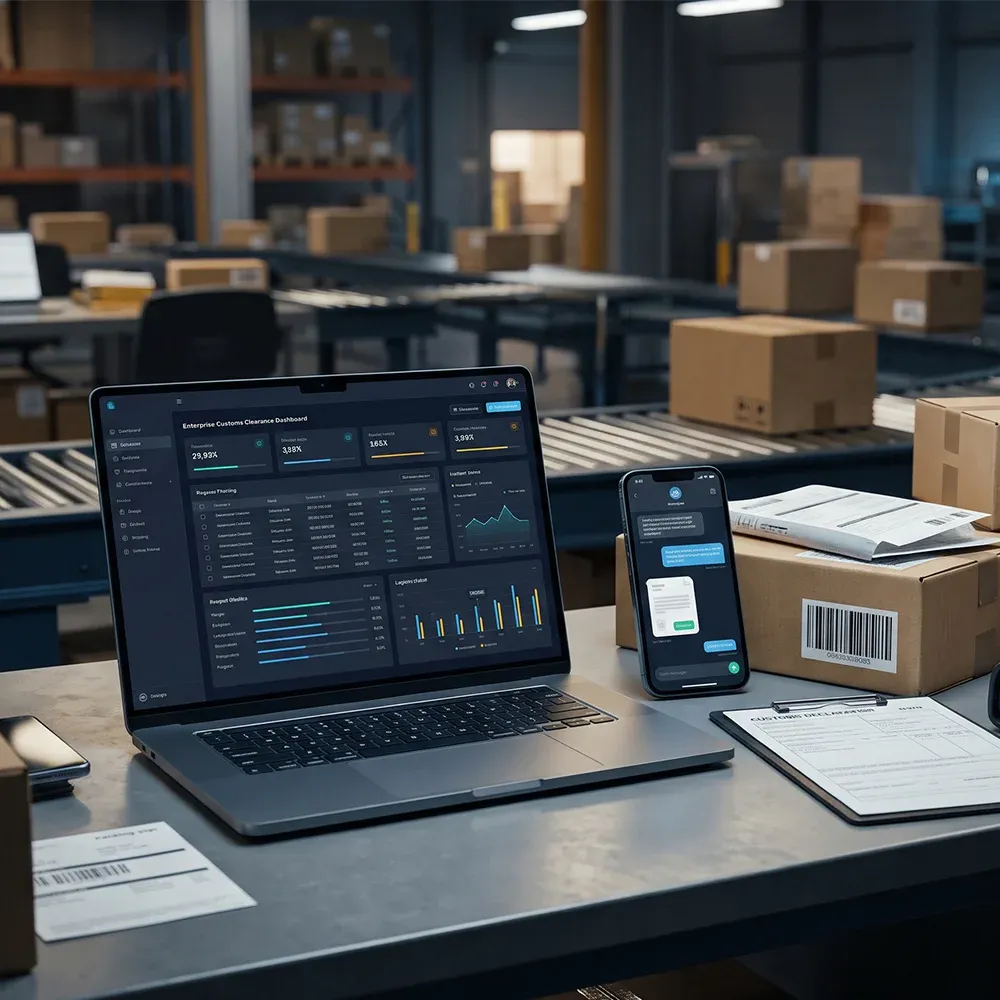
Instead we built a small, separate system for the new flow and connected it where it needed to be connected. It records each parcel, handles the communication, assigns the clearing agent, and tracks the money. The main forwarding system is untouched.
What We Built
- Recording. Every parcel from the brand is recorded on arrival, with the recipient details the brand supplies.
- The chase. The system emails and WhatsApps each recipient, explains who YourEasyShop is and why a tax ID is needed, and asks for it. If there's no reply, it asks again on a schedule. When a reply arrives, an agent built on LangGraph reads it, decides whether it contains a valid tax ID or a question, records the ID against the parcel if it does, and routes the message to a person if it doesn't. This is the one step in the flow that needs judgment, because people reply in every way imaginable, and it is the only step where a model is used.
- Clearance. YourEasyShop is assigned as the clearing agent on the customs portal for each shipment, so the parcel can be released on the customer's behalf once the ID is on file. Every clearance leaves a record.
- The margin. The system tracks what the customer was charged against what the vendor was paid, parcel by parcel, so the margin on the contract is an exact number as each parcel clears.
- The workflow runs on n8n; the agent on LangChain and LangGraph. Rules do everything that follows a rule; the agent does the one thing that doesn't.
Why Messaging, Not Calls
The obvious way to collect thousands of tax IDs is to phone people. We didn't, for three reasons that came out of discovery. A call from an unknown forwarder asking for a tax number sounds like fraud; a message that explains the brand, the parcel and the reason, and that the recipient can read twice, does not. A call has to be answered at the moment it's made; a message is answered at 11 pm from a sofa, which is when most of them were. And a message leaves a record, which matters when the clearing agent later has to show that the ID was supplied by the recipient.
What the System Looks Like Day to Day
A batch arrives from the line-haul vendor and is recorded. Within minutes, every recipient without an ID on file has an email and a WhatsApp. Replies come in over the following hours and days; the agent reads each one, files the IDs, and puts the questions and the odd replies in a short queue for a person. Reminders go out on schedule to anyone who hasn't answered. As IDs land, clearances are assigned and parcels are released. The person running it spends their time on the short queue of questions, and the margin report updates as each parcel clears.
What Changed
- A new revenue line handled without hiring anyone to chase customers
- Recipients answer a message on their phone instead of taking a phone call from a company they've never heard of
- The system does the chasing, on a schedule, until it has what it needs
- Clearance happens on the client's behalf, parcel by parcel, with a record
- The margin on the contract is known parcel by parcel, as each one clears
- The main forwarding system was not touched
What We'd Tell Another Founder
When a new contract doesn't fit your system, the wrong move is to force it in, and the second-wrong move is to handle it by hand. A small system built for the new flow, connected where it needs to be, is usually days of work and pays for itself on the first batch.
The other lesson is about where AI belongs. This whole system has exactly one AI step: reading a reply from a stranger and deciding what it contains. Everything else is a rule. That proportion, one judgment step and a dozen deterministic ones, is what most "AI automation" should look like, and it is why the running cost is small.

Tell Us How Your Operation Runs.
We'll Tell You What to Build.
A free 30-minute consultation with our founder. You leave with a clear view of what to build, what to automate and what to leave alone. No pitch deck. It is the shortest way to find out whether we are the right custom software development company for your operation, and we'll say so either way.
Book a Free ConsultationFive initial discovery calls a week, one a day, 11 AM to 3 PM Eastern.